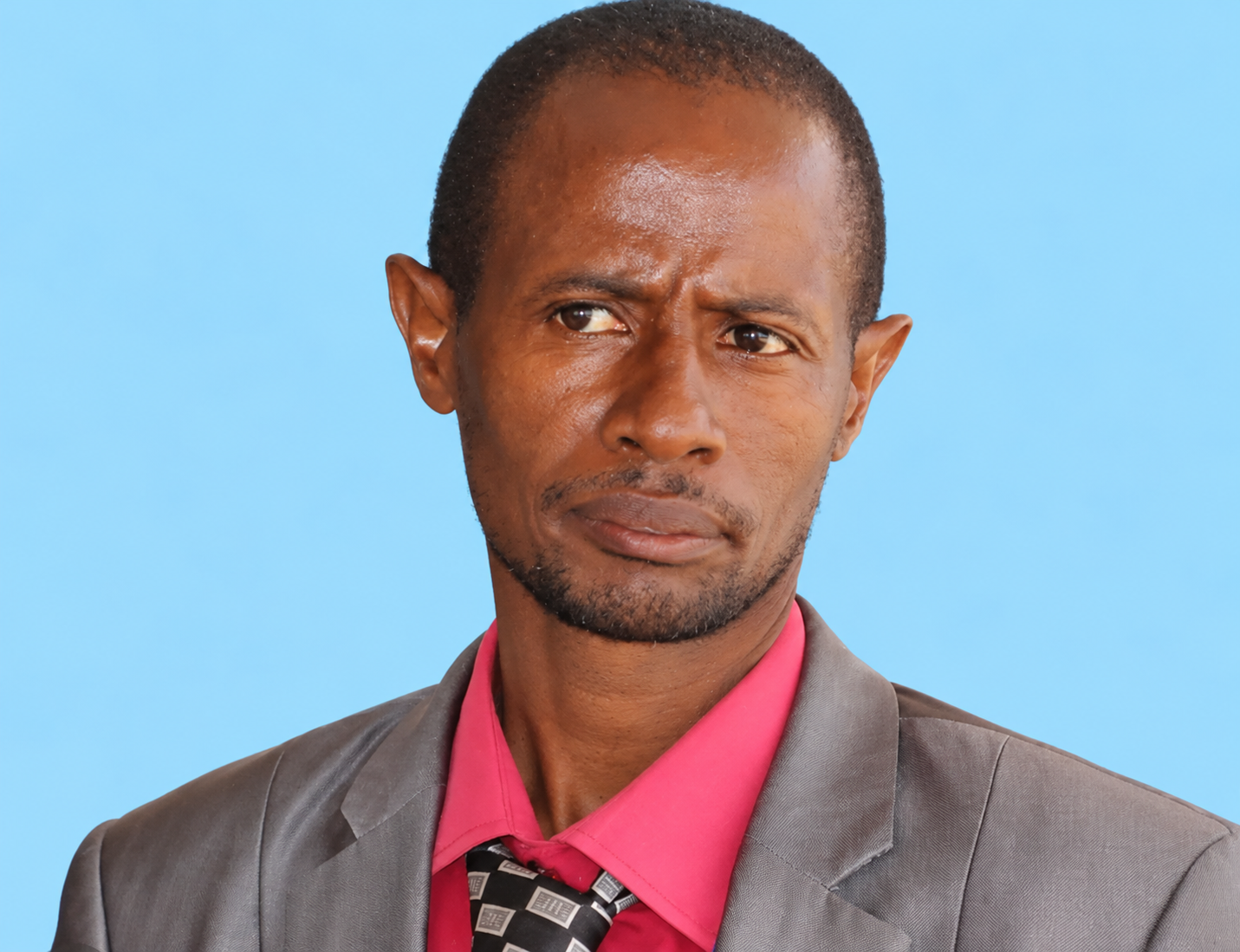
Statement: The Arrest of Opposition Leader Barafinda Sekikubo Fred
The Global Campaign for Rwandans' Human Rights demands the immediate and unconditional release of Barafinda Sekikubo Fred, the opposition politician and party leader arrested by the Rwanda Investigation Bureau (RIB) together with Mazimpaka Patrick and Nkeramihigo Japhet, and the dropping of charges that criminalise nothing more than political speech.
On 29 January 2026, RIB announced the detentions in a statement published on its X account: "Abaregwa bafungiye kuri Sitasiyo ya RIB ya Kimironko, Kicukiro BK na Kimihurura, mu gihe iperereza rikomeje ku byaha bakurikiranweho." In other words, the accused are being held at the RIB stations of Kimironko, Kicukiro BK and Kimihurura while the investigation into the offences they are accused of continues.
That short announcement is all the state has offered. No charge has been brought before a judge, no date has been given for a court appearance, and the families have received no confirmation of where each man is being held or in what condition. Holding people in police stations under a continuing investigation, without judicial control, is precisely how an enforced disappearance begins in Rwanda.
The accusation is spreading rumours or false information (ibihuha) on YouTube and on online platforms. In Rwanda, that accusation has become the regime's standard instrument against anyone who dares to speak in public about politics.
A Politician Who Kept Coming Back
Barafinda Sekikubo Fred is a Rwandan politician, founder and leader of R2UDA, the Rwanda Revolutionary United Democratic Advancers party.
He first became widely known during the 2017 presidential election, when he presented his candidacy papers to the National Electoral Commission. He did it again for the 2024 presidential elections. On both occasions the Commission found that he did not meet the required conditions, and on both occasions he was kept off the ballot.
Being a candidate is not a crime, and being refused registration is not a crime either. What matters is that a Rwandan citizen tried, twice, to take part peacefully in the political life of his own country, and that today he is the one behind the wall of a police station.
A Man, Not a Caricature
Barafinda has drawn heavy attention from the media, and his manner of speech, at times boastful and unconventional, has been used to present him as an unstable figure. News reports also indicate that he had at some point sought care at CARAES Ndera, the national neuropsychiatric hospital.
We say plainly: a person's medical history is not a criminal record, and unusual speech is not an offence. Rwandans with mental health conditions are entitled to care, dignity and the full protection of the law, not to detention in a police station and public ridicule. If Barafinda needs medical attention, the authorities have an obligation to provide it, and holding him without confirmed access to treatment and without judicial supervision is a serious cause for concern.
Speech Is Not a Crime
The allegations against Barafinda and his co-accused concern videos and commentary published online. No violence is alleged. No theft, no fraud, no injury. The state's case rests on the claim that their words were untrue, a charge elastic enough to cover any criticism of those in power.
International law protects political expression, including expression that offends or unsettles a government. Article 19 of the International Covenant on Civil and Political Rights, which Rwanda has ratified, guarantees the right to hold opinions without interference and to seek, receive and impart information and ideas of all kinds. Prosecuting an opposition leader for what he said on YouTube is a direct violation of that guarantee.
Rwandan law itself provides that no one may be convicted for an opinion. Charging a politician with spreading false information for speaking about public affairs inverts that protection and turns a criminal court into an instrument of political discipline.
The Wider Pattern
Barafinda's arrest is not an isolated case. Victoire Ingabire Umuhoza, Diane Rwigara, Déogratias Mushayidi, Yvonne Idamange and many others have been arrested, tried, imprisoned or driven into exile for the same offence: refusing to be silent.
The pattern is deliberate. Each prosecution sends the same message to Rwandans: that opposition is a path to a cell, that the ballot box is closed to anyone outside the ruling party, and that a video posted online can cost a person their freedom. Elections held under such conditions cannot be described as free or fair.
What We Demand
- The immediate and unconditional release of Barafinda Sekikubo Fred, Mazimpaka Patrick and Nkeramihigo Japhet, and the withdrawal of all charges based on their speech.
- That all three be produced before a court without delay, and that the Rwandan authorities disclose their exact places of detention, their condition and their access to family, lawyers and medical care.
- That Barafinda receive any medical care he needs, in a proper health facility, and that his health and manner of speech never be used to justify his detention or to discredit him in public.
- An end to the prosecution of journalists, bloggers and opposition politicians for spreading false information, a provision that has no place in a democratic legal order.
- That the African Union, the European Union, the United Nations and Rwanda's bilateral partners raise these cases publicly and press for the release of all prisoners of conscience in Rwanda.
The Global Campaign for Rwandans' Human Rights stands with Barafinda Sekikubo Fred, with his family and party, and with every Rwandan who still believes that a country can be changed by argument rather than by force.